
Building for Permanence
Institutions, Elites, and the Preservation of Power


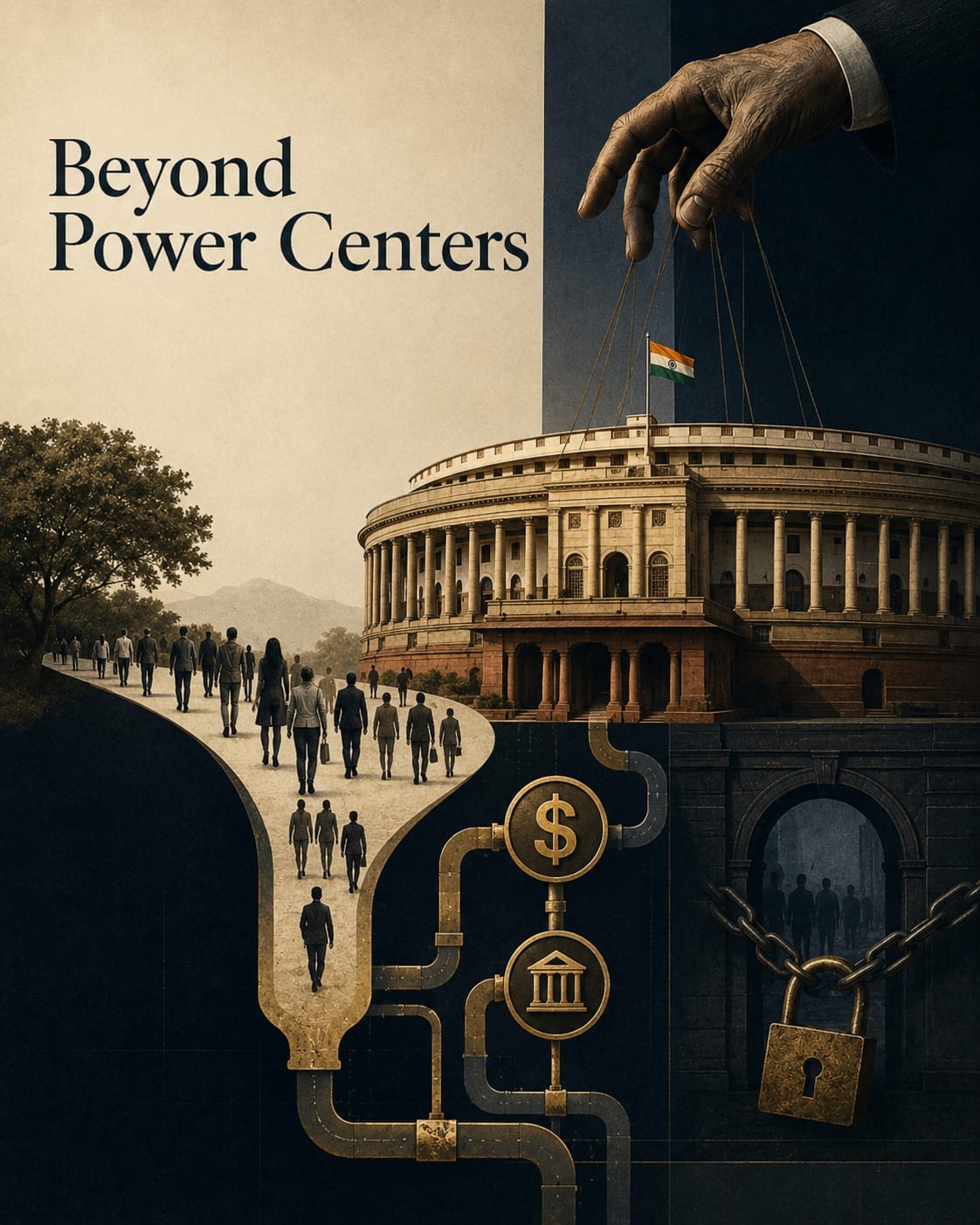
This essay is an attempt to initiate a conversation, and perhaps a degree of introspection, within the Indian Right on the question of political longevity and institutional inheritance.
Its origins lie in three separate experiences. The first was a large right wing intellectual gathering held at Bharat Mandapam last year. During a discussion on the event, a senior and perceptive attendee remarked that while the gathering was impressive in scale and attendance, it seemed overly focused on celebrating achievements and personalities rather than engaging in a serious examination of the challenges that lay ahead. The observation stayed with me because it raised a broader question about whether movements devote sufficient attention to the conditions necessary for their own long term survival.
The second experience came at an event at the India Habitat Centre where I learned that until relatively recently the Indian Right found itself excluded from many of the intellectual and institutional spaces that shaped public discourse. This was a reality reflected in several accounts of India's post independence elite formation and the social composition of its governing and knowledge producing institutions.
The third influence emerged from reading Ramachandra Guha's article, Where Are the Conservative Intellectuals in India?, alongside the concluding chapters of The Nehru Development Model and studies of the Emergency period. Together, these works highlighted the remarkable durability of institutions associated with the Nehruvian consensus. Bureaucratic structures, academic networks, planning commission, sections of the judiciary, and other institutions continued to carry forward particular assumptions about governance and public policy long after the passing of the generation that had originally established them. Equally instructive was the manner in which many institutions that were formally expected to remain “autonomous” and “apolitical” increasingly became intertwined with partisan objectives during the Indira Gandhi era and for all practical purposes functioned as an extension of the party.
These observations prompted a broader inquiry into how political movements secure longevity beyond electoral success. Victory at the ballot box does not automatically confer the capacity to govern, nor does successful governance guarantee survival beyond the careers of individual leaders. Electoral strength, administrative competence, and institutional endurance are related but distinct phenomena. A movement may possess one without necessarily possessing the others. Enduring influence depends upon factors that are only partially connected to electoral performance, including elite formation, talent recruitment, bureaucratic relationships, succession mechanisms, intellectual production, and the capacity for strategic adaptation. Without in any way diminishing the importance of electoral success, it is often these factors, working in conjunction with electoral gains rather than apart from them, that determine whether a political movement's influence proves fleeting or enduring.
Movements that excel at winning elections frequently discover upon entering office that they lack the administrative machinery, policy expertise, and institutional relationships necessary to translate electoral mandates into durable outcomes. Even movements that govern effectively may find that success breeds complacency, that supporters become disengaged, or that opponents learn from their methods and develop effective counter strategies. Conversely, other movements achieve considerable intellectual influence yet find their ideas surviving primarily within universities, think tanks, journals, and professional networks long after they have lost the ability to shape public policy directly.
The cases examined in this essay emerged from very different historical, cultural, and political circumstances. Yet despite these differences, they confronted remarkably similar questions. How does a political movement convert electoral victory into lasting institutional influence? How does it sustain governing capacity across generations? How does it balance centralization with resilience, competence with competition, and ideological cohesion with intellectual adaptability? Most importantly, how does it ensure that its influence survives the departure of its founding generation?
By examining these questions across multiple cases, this essay seeks to develop a broader understanding of the relationship between electoral success, institutional power, and political longevity than any single case study could provide.
Given the limitations of time, resources, and available data, I have not attempted a systematic assessment of the extent to which the Indian Right has succeeded or failed in building durable institutions of its own. Such an undertaking would require a far more comprehensive study than is possible here. This essay is therefore not intended as a blueprint or a set of prescriptions. It is an exploratory exercise that examines how other political movements and governing ecosystems confronted the challenge of translating political success into enduring influence. In some areas the Indian Right appears to have made considerable progress, while in others important questions remain unresolved. Determining the extent of those successes and shortcomings lies beyond the scope of this essay. My purpose is more modest, namely to examine the experiences of others, identify recurring patterns, and encourage a discussion about longevity, institutional development, and political inheritance that remains both necessary and overdue.
The American Conservative Experience
“The Right may make itself a nuisance, but it will not make itself into a government. It is not a wave of the future; it is a voice of frustration and despair, a wail from an irrecoverable past”
The conservative movement in the United States represents one of the most striking examples of how a marginalized ideological tendency can construct a durable counter-elite and, through it, reshape the political landscape. In post-war America, conservatives were, in many respects, ideological pariahs. They were sidelined by both of the major political parties, whose platforms to a large degree lay to the left of what conservatives advocated. They had little prospect of securing the presidential nomination, much the same was true in Congress, while their positions were largely ignored by the media, ridiculed in universities while much of the publishing industry regarded conservative ideas as commercially and intellectually unappealing.
It was against this backdrop that a small group of conservative intellectuals, activists, publishers, and benefactors assembled in Room 2233 of New York City's Lincoln Building in December 1953. Their assessment of the situation was stark. As publisher Henry Regnery observed, the social groups most naturally aligned with conservatism possessed considerable economic resources and broadly reflected the instincts of many ordinary Americans. Yet conservatism remained politically and culturally weak. The explanation, he argued, lay not in a lack of wealth or popular sentiment, but in the distribution of institutional power. The left, in his view, exercised disproportionate influence over the commanding institutions of opinion formation and elite reproduction: the universities, the press, and the foreign-policy establishment. Until conservatives developed institutions capable of challenging this dominance, they would remain a collection of isolated individuals railing against an order they lacked the means to influence.
This diagnosis carried an important implication. If institutions shaped public opinion and public opinion shaped political outcomes, then conservatives could not rely on electoral politics alone. They would first have to build an alternative infrastructure capable of producing ideas, training personnel, disseminating arguments, and coordinating action across multiple spheres of public life.
The results were remarkable. Within little more than a decade of that meeting, conservatives had succeeded in capturing the Republican presidential nomination through Barry Goldwater's insurgent campaign of 1964. Although their relationship with the Nixon administration remained uneasy and often contentious, conservatives increasingly secured a seat at the table within the broader Republican coalition. The election of Ronald Reagan in 1980 and his subsequent re-election in 1984 marked the movement's arrival as a dominant force within national politics. By 1994, conservatives had played a central role in the Republican capture of Congress, while parallel efforts in the legal sphere laid the foundations for a long-term transformation of the judiciary, a process that reached its most visible culmination in the early twenty-first century.
This section does not examine grassroots conservative activism or the mechanics of electoral mobilization. Instead, it explores how a conservative counter-elite was constructed through an institutional ecosystem linking philanthropic funders, media enterprises, publishers, think tanks, legal advocacy groups, academic entrepreneurs, and political actors. Through this network, conservatives cultivated talent, generated ideas, forged professional connections, and translated intellectual influence into political power. The creation of this institutional architecture, rather than any single electoral victory, provides the key to understanding the conservative movement's extraordinary ascent from the margins of American public life to the centre of political and legal authority.
Building a Conservative Counter-Elite
Bypassing the Gatekeepers
The conservative crusade for counter-elite production was rooted in the belief that political influence flowed not only from votes and office-holders, but from the ideas, institutions, and opinion-makers that shaped elite decision-making. This conviction was reflected in the establishment of conservative publishers such as Regnery Publishing, which operated on the premise that “read by the right people, books could have an impact far greater than their sales figures.”
While earlier publications like Devin-Adair and Caxton Printers existed who became increasingly libertarian in opposition to the New Deal, the establishment of Regnery Publishing in 1947 as a non profit on the model of the University Presses marked a significant departure. This was followed by other endeavours such as Arlington House Publishing in 1964 by a former editor at Macmillan. The mere establishment of Conservative Publishing Houses did not however translate to a wider readership, impact on policy, a shift in the overton window or gaining academic attention.
At this stage, conservative books catered largely to a small, diffuse, and niche audience. Print runs were modest, making it difficult for publishers to break even, let alone turn a profit. Nevertheless, these presses performed a vital function in the sense that they kept conservative ideas in circulation, provided an outlet for arguments excluded from mainstream publishing, and ensured that books which established houses would neither commission nor touch could still find their way into print. Though even on the rare occasions when sales materialized, legitimacy and intellectual respectability remained elusive.
A case in point was William F. Buckley Jr.'s God and Man at Yale. The book sold more than 35,000 copies in its first six months and rose as high as No. 16 on the New York Times bestseller list. Yet commercial success did little to shield it from establishment hostility. The Yale administration mounted an aggressive response, arranging for McGeorge Bundy (a Harvard professor, later a senior Kennedy administration official and future president of the Ford Foundation) to review and denounce the book in The Atlantic. One Yale administrator assured trustees that, “We intend to take the offensive in this matter and not sit by waiting for complaints to roll in when the book is published.” The Saturday Review devoted space to two separate reviews, both of which only went on to denounce the book. Despite the forces arrayed against it, the book nevertheless secured a place on the bestseller list.
However, even worse than hostile reviews was indifference. Ex-New Dealer Donald Richberg’s Labor Union Monopoly, a call for applying antitrust law to unions commissioned by Milliken, was met largely with silence from the national press. On the two occasions where it did attract attention, reactions often reflected prior ideological commitments. The New York Times dismissed the book as “hysteria,” concluding that the “fear-ridden Richberg” was a “dubious guide” on the question of organized labor. The Chicago Tribune, by contrast, offered a favorable review and drew on Richberg’s arguments in its coverage of the ongoing Kohler strike. Academic reviewers laid into the book even more aggressively, portraying both the work and its author as “bitter,” “biased,” and “unfair.”
These reactions, however, exposed the ideological tilt of a reviewing culture dominated by liberal intellectual networks who made it difficult to secure serious engagement from the institutions that shaped elite opinion. At the same time, they reinforced the conservative conviction that independent right-wing publishing institutions were not merely desirable but necessary. As Regnery remarked “Nearly all books are published in New York, and the means by which books are brought to the public are fairly much controlled from New York,” and there, the industry was saturated with “left-wing intellectuals.” Regnery thus diagnosed this effective liberal veto as the “most effective form of censorship of ideas in this country.”
If the mainstream publishing landscape offered little encouragement, the broader media environment was scarcely more receptive. Conservative broadcasting emerged from decidedly modest beginnings. When the Manion Forum of Opinion debuted in October 1954, it aired only once a week on twenty nine radio stations through the Mutual Broadcasting System. Yet, over time conservatives succeeded in building a formidable communications network. At its peak in 1964, conservative programming accounted for at least 6,600 broadcasts each week across 1,300 radio and television stations, reaching roughly one fifth of all outlets in the country and maintaining a presence in every state except Maine. Programs such as the Manion Forum, Dan Smoot Report, and Life Line spearheaded this expansion. By 1962, the Manion Forum alone was carried by roughly 270 radio stations and nearly fifty television stations, illustrating both the scale of conservative media's growth and the substantial resources required to sustain it. This success, however, was neither immediate nor free of significant setbacks.
Television posed formidable obstacles for conservative activists. Production costs were high, and even when sufficient funds could be assembled, securing airtime proved equally difficult with National networks generally refusing to carry right wing programming because of its controversial reputation.
Radio too offered little respite. The difficulties became apparent in the dispute between the Mutual Broadcasting System and the Manion Forum over a broadcast by industrialist Herbert Kohler. Kohler discussed the ongoing UAW strike at his Sheboygan plant, a labor conflict that had become a flashpoint of national attention. His criticisms of compulsory unionism, defense of the right to work without union membership, and allegations of union sanctioned violence echoed themes that were central to conservative critiques of organized labor.
With emotions surrounding the strike running high, Mutual feared that airing the address could expose both the network and its affiliates to defamation suits from the union. Executives therefore agreed to carry only an edited version of Kohler’s remarks. Kohler rejected the proposal and even offered to indemnify the network and its member stations against any resulting legal losses if the speech were broadcast in full. Mutual nevertheless refused, and the program was cancelled.
The Manion Forum then proceeded to sever its relationship with Mutual three days after the cancelled broadcast. The Forum's reach fell overnight from 113 stations to just 72, forcing it to rebuild its network through agreements with independent stations which required additional financial resources and substantial organizational effort, from identifying sympathetic broadcasters to negotiating and maintaining new contractual relationships.
The tradeoff, however, proved worthwhile in the long run. The Forum gradually replaced its dependence on Mutual Broadcasting with the independently organized “Manion Forum Network” (a nationwide syndication arrangement through which the program was carried by independent stations). By 1958, this network had supplanted the forty-one Mutual affiliates with forty-three independent stations. The newfound autonomy gave the Forum far greater editorial latitude. In the year following the break with Mutual, fully one quarter of Forum broadcasts focused on exposing what Manion viewed as the excesses and abuses of organized labor.
However, exclusion from mainstream institutions was not the only challenge conservatives faced. They also confronted a federal government increasingly willing to deploy administrative and regulatory tools against ideological opponents. Under the Kennedy administration, the Ideological Organizations Project (IOP), sought to revoke the tax-exempt status of a number of right-wing organizations, including the John Birch Society, Christian Crusade, and Life Line. Prior to that Regnery Publishing had its tax exempt status removed by the IRS.
The Fairness Doctrine posed a second vulnerability. A regulatory standard adopted by the Federal Communications Commission (FCC) in 1949, it required stations to provide “balanced treatment” of controversial issues of public importance and could impose free-time obligations requiring opposing viewpoints to be aired if it was felt they lacked adequate sponsorship. With the FCC's ultimate enforcement tool remaining the power to revoke a station's broadcasting license, the doctrine effectively ensured broadcasters avoid contentious (read conservative) material altogether. The decision not to air the Kohler broadcast was therefore not simply a commercial calculation but one shaped by a regulatory environment in which controversy carried significant institutional risks.
Institutional justification for these tactics soon followed. In December 1961, labor leaders Victor and Walter Reuther, writing at the behest of the Kennedys, produced a 24 page memorandum outlining how the administration could deploy federal power against what they termed the “radical right.” Beyond recommendations involving the IRS and the Justice Department, the memo urged the use of the FCC to scrutinize stations that granted free or discounted airtime to conservative broadcasters and encouraged both the administration and allied liberal organizations to file Fairness Doctrine complaints against stations carrying right-wing programming.
Conservative broadcasters responded by carefully tailoring their rhetoric to avoid triggering Fairness Doctrine obligations, often refraining from naming specific individuals or organizations that could claim a right of reply. Yet pressure for more aggressive action persisted. Writing in The Nation in 1964, journalist Fred J. Cook argued that if the FCC proved unable to curb conservative broadcasting, the IRS could achieve the same end by revoking the tax-exempt status of conservative organizations. Together, these proposals reflected a growing willingness among liberal activists and commentators to employ administrative and regulatory mechanisms in the struggle over the political airwaves.
The Unions brought in other tactics to bear, urging unions and their members to exert financial pressure to pull their accounts from St. Joseph Bank and Trust Company (which handled the Manion Forum’s accounts and whose president, B. K. Patterson was the chairman of the Manion Forum’s board of trustees). By applying intense financial pressure, union leaders hoped the bank would have to dump the trust, which funded the Forum, in order to stay in business. The trust would then become too great a risk, they calculated, for other banks to accept.
The liberal press also turned sharply against the conservative movement once it became too prominent to ignore, focusing on its most controversial elements and using them to discredit conservatism as a whole. The John Birch Society provided an ideal target. Led by Robert Welch, who notoriously alleged that President Eisenhower and other senior officials were conscious agents of a Communist conspiracy, the organization offered critics a ready-made symbol of right-wing extremism.
A turning point came in 1961 when Time and the Los Angeles Times published high-profile investigations of the Birch Society, bringing unprecedented national attention to an organization that had previously attracted little mainstream scrutiny. What began as criticism of the Birchers soon evolved into a broader indictment of the conservative movement itself. Major publications increasingly blurred the distinctions between mainstream conservatives, anti-communist activists, and genuinely fringe groups, presenting them as components of a common ideological tendency. The New York Times, for instance, discussed the Birch Society, the Manion Forum, the American Nazi Party, and National Review within the same frame of reference, while other commentators argued that respectable conservatism and its more radical offshoots were functionally inseparable. By the early 1960s, much of the press had adopted a narrative in which the movement's most eccentric figures were treated not as outliers but as representative of conservatism as such.
The nascent conservative insurgency rose up to the challenge with a counteroffensive of its own. Rather than limiting itself to exposing liberal bias, it marshalled its expanding constellation of publishers, journals, magazines, broadcasters, and conservative benefactors to hit back against the liberal establishment while bypassing the institutional pressures and gatekeepers that had long constrained conservative influence.
Constructing a Conservative Public Sphere
Realizing that mainstream publishing and retail channels were often closed to conservative authors, activists and publishers developed alternative networks of distribution that relied heavily on sympathetic business interests. Richberg’s book, as the preceding examples demonstrate, became an early illustration of how these parallel distribution networks could compensate for exclusion from conventional publishing channels. Harnischfeger ordered 500 copies, a private foundation offered to place as many as 1,200 copies in college libraries, and the National Association of Manufacturers explored purchasing 10,000 copies. Sterling Morton of Morton Salt likewise distributed copies to the presidents of independent colleges. Such interventions reflected a growing recognition among business leaders that conservative books could serve as effective weapons in their broader campaign against organized labour.
Promotion followed a similar logic. Conservative media figures and publications provided not only access to receptive audiences but also conferred a form of legitimacy unavailable in mainstream cultural institutions. Endorsements from trusted movement authorities such as Clarence Manion transformed books into approved reading within conservative circles. Manion promoted Richberg’s work on his radio programme Dictatorship by Labor and later hosted the author for an extended discussion, while Regnery advertised in National Review and Human Events and distributed promotional material through the Dan Smoot Report. Together, these channels created an alternative ecosystem of validation and circulation through which conservative ideas could reach readers despite exclusion from established gatekeepers.
The Conservative Book Club (CBC) represented another successful attempt to circumvent traditional publishing bottlenecks and cultivate a mass conservative readership. Leveraging National Review’s subscription lists, it quickly enrolled roughly 30,000 members and created a direct marketing channel for conservative books through discounted offerings and targeted outreach. Efforts to widen the movement’s audience extended beyond committed conservatives. In the aftermath of Barry Goldwater’s 1964 campaign, Ted Loeffler’s Constructive Action sought to expose politically unaligned Americans to conservative ideas through large-scale literature distribution. In partnership with Young Americans for Freedom, it sponsored essay competitions for high school and college students built around None Dare Call It Treason. The initiative placed approximately 480,000 copies of the book into students’ hands within months.
The movement's media presence grew rapidly during the Goldwater era. National Review doubled its circulation from roughly 30,000 in 1960 to over 60,000 by 1963, exceeded 90,000 during the Goldwater campaign, and surpassed 100,000 by the end of the decade. William F. Buckley Jr’s syndicated newspaper column grew from thirty-eight papers in 1962 to more than three hundred outlets by the early 1970s. In 1966 he launched Firing Line, a nationally televised debate program that brought conservative arguments into American living rooms and later won an Emmy Award. The movement's intellectual influence was reinforced when Milton Friedman became a regular Newsweek columnist that same year, providing conservative and free-market ideas with access to a mass audience. Human Events expanded to a circulation exceeding 100,000 by the mid-1960s. Clarence Manion expanded the reach of his Manion Forum radio program by distributing broadcasts free of charge to university radio stations. By 1963 the program was airing on more than twenty campuses, including Yale, Brown, Montana State, and the University of South Carolina. Although some students encountered resistance from faculty and administrators, the initiative represented an early effort to establish a conservative presence within institutions widely perceived as dominated by liberal opinion.
Rather than merely denouncing perceived bias, conservatives began building organizations to monitor, pressure, and influence major broadcasters while generating empirical evidence designed to substantiate claims of liberal media bias. The Committee to Combat Bias in Broadcasting, an offshoot of the American Conservative Union, mobilized grassroots activists to systematically monitor television news through Media Watch cards distributed by conservative media ecosystem. This effort culminated in Edith Efron's landmark study of network election coverage, financed by the Historical Research Fund, whose projects chair was William F. Buckley Jr.
Prompted in part by conversations with liberal ABC anchor Howard K. Smith, who himself believed journalists were often blind to conservative perspectives, Efron undertook a quantitative analysis of network broadcasts in the 1968 elections. Her study concluded that roughly half of all words spoken about Hubert Humphrey were positive, compared to only 8.7 percent for Richard Nixon, leading her to argue that network news consistently followed an "elitist liberal left" line. The conservative movement's institutional infrastructure served to maximize the book's impact. Buckley, National Review, Firing Line, The Advocates, and the Conservative Book Club coordinated a promotional campaign that framed The News Twisters as a scientific demonstration of liberal bias rather than a partisan critique. The Nixon White House stepped in to further boost sales with Nixon aides elevating its profile and reportedly securing its appearance on the New York Times bestseller list by purchasing copies from stores whose sales determined the rankings.
The establishment of Accuracy in Media (AIM) by Reed Irvine in 1969 marked a significant evolution in conservative media strategy. Rather than attacking the press through overtly partisan rhetoric, AIM challenged broadcasters on the grounds of factual accuracy, objectivity, and professional journalistic standards, allowing conservatives to contest media power using the language of the profession itself. Equally important was AIM's innovative weaponisation of the Fairness Doctrine. While conservatives had traditionally sought its repeal, AIM demonstrated that it could instead be employed against perceived liberal bias in television news. By 1975, Irvine was using appearances on Manion Forum to instruct supporters on filing FCC complaints and publicizing AIM's cases against major networks, even securing a FCC ruling against ABC before it was later overturned on appeal. In doing so, conservatives demonstrated a growing willingness to use existing regulatory institutions as instruments of political contestation rather than viewing them solely as hostile terrain. This strategy dovetailed with the Nixon administration's campaign against what it regarded as media bias. Sharing AIM's concerns but wary of direct governmental intervention, White House officials like Chuck Colson helped expand the organization's reach by facilitating funding, advertisers, and prominent board members while coordinating broader media-monitoring efforts.
More ambitious efforts sought to influence media institutions from within. In 1965, David Dye launched Medias Unlimited, an effort to organize thousands of conservative shareholders into a voting bloc capable of exerting influence over CBS. Although the campaign never acquired enough shares to achieve its objective, it reflected an emerging conservative recognition that shaping public opinion required engagement with the ownership and governance of media institutions, not merely criticism of their content.
Union pressure was countered by innovative tactics. Faced with the boycott of his bank as described previously, Manion turned to his network of sympathetic business leaders and urged them to support the affected bank through new deposits. Within a month, Sears Roebuck under Robert E. Wood and several other firms had deposited approximately $55,000, while the Manion Forum itself added a further $5,000. Additional backing from companies such as Sun Oil and Inland Container helped offset the boycott's effects and highlighted the growing capacity of conservative activists to sustain their institutions through allied corporate networks.
In response to mounting media attacks that increasingly portrayed conservatism and Birchers as indistinguishable, Buckley and National Review moved to police the boundaries of the conservative movement and establish it as a credible governing alternative as opposed to a vehicle for fringe conspiracism and publicly broke with the John Birch Society. Although the decision generated backlash from sections of the grassroots and risked alienating committed activists, Buckley saw it as necessary to preserve “responsible conservatism” and protect the movement’s broader political credibility by excluding positions that could be easily caricatured by opponents. Figures such as Clarence Manion worked to ensure that grassroots energy remained within the conservative coalition through alternative channels of activism most notably the Manion Forum Conservative Clubs, which offered a decentralized vehicle for activism without the liabilities attached to the Birch Society.
The Battle for Intellectual Production
The Universities
“In the United States at this time, liberalism is not only the dominant but even the sole intellectual tradition”.
Lionel Trilling
Universities constituted another major front in the conservative struggle for cultural influence. Echoing the critique first articulated by William F. Buckley Jr. in God and Man at Yale (1951), conservatives argued that higher education systematically marginalized their viewpoints through hiring practices, promotion decisions, research funding, and control over campus intellectual life. William Rusher described conservative academics as a “neglected generation of scholars,” disadvantaged within their departments and denied the institutional support routinely extended to liberal colleagues. The result, conservatives believed, was not merely the underrepresentation of conservative faculty but the construction of an intellectual environment in which alternative perspectives struggled to gain visibility.
These concerns also fueled conservative activism on campus. In 1962, broadcaster Clarence Manion hosted Michigan State professor John N. Moore to discuss what conservatives regarded as the ideological homogeneity of American universities. Moore argued that campuses overwhelmingly sponsored liberal speakers while excluding conservative voices and maintained library collections that reflected the same imbalance. At Michigan State, publications such as The Nation and The New Republic were readily available, whereas influential conservative periodicals including National Review, Christian Economics, and The Freeman were absent. The treatment of conservative literature beyond the classroom reinforced these perceptions. None Dare Call It Treason, one of the movement’s most widely distributed books, was banned at Texas Tech’s Lubbock campus and publicly burned at Indiana University.
An effort to counter this was the establishment of the Intercollegiate Society of Individualists (ISI) in 1953 by the libertarian scholar Frank Chodorov. Conceived to identify and cultivate “the best and the brightest” college students, its mission was to nurture future leaders committed to the American ideal of ordered liberty. Over time, the organization evolved into the Intercollegiate Studies Institute, assuming a more distinctly conservative orientation, with William F. Buckley Jr. serving as its first president.
Unlike organizations such as YAF or the Young Republicans, which focused on activism and political mobilization, ISI functioned primarily as an intellectual talent pipeline, seeking to develop a counter-elite capable of shaping conservative thought and institutions. As William F. Buckley remarked, "we don't care about crowds of 1,000; a crowd of 30 (provided the 30 are intelligent and conscientious) would serve our purposes better." By 1965, it had established nearly eighty campus chapters, ranging in size from a dozen to over one hundred members. These chapters were required to operate exclusively as educational societies and refrain from political activism. This restriction was not merely a safeguard for ISI’s tax-exempt status; it reflected a broader institutional philosophy that students should engage with enduring ideas rather than become absorbed in the immediate political controversies of the day, leaving organizations such as the Young Americans for Freedom to contest them.
Reflecting this philosophy, ISI organized summer schools from 1960 to 1982 that brought selected students into direct contact with leading conservative thinkers such as Ludwig von Mises, Milton Friedman, Friedrich Hayek, Russell Kirk, Allan Bloom, Irving Kristol, and Harry Jaffa.
Attendance grew from 35 students in 1960 to 105 students from 85 colleges by 1965. Over twenty-two years and roughly fifty schools, more than 2,000 students participated, forming networks that later extended into conservative politics, academia, journalism, law, and think tanks. Alumni included future ISI president Ken Cribb. The program was discontinued in 1982 after ISI concluded that lectures and short seminars offered a more cost-effective means of reaching a rapidly expanding student population.
The ISI taking note of the marginalisation of conservative lecturers developed a nationwide lecture network that connected students with conservative scholars, economists, jurists, and public intellectuals. Early speakers included Hayek, Friedman, Russell Kirk, and Buckley; later participants included Antonin Scalia, Richard Pipes, Robert George, Walter Williams, Christina Hoff Sommers, and Dinesh D'Souza, with ISI covering travel expenses. By the mid-1980s the organization was sponsoring roughly 200 lectures annually, a figure that rose to 310 lectures attended by 36,000 students in 1993–94 and 292 lectures attended by more than 40,000 people in 1998–99. Often paired with literature distribution and local campus organizing, these events enabled ISI to maintain a sustained intellectual presence across American higher education while linking students to the broader conservative movement.
Alongside elite cadre formation, ISI sought to furnish conservative students with an intellectual infrastructure of their own. It distributed books, journals, pamphlets, lecture recordings, and material to set up campus "bookshelves" stocked with foundational texts by Friedrich Hayek, Ludwig von Mises, Henry Hazlitt, Russell Kirk, Richard Weaver, Whittaker Chambers, and Milton Friedman. More than 40,000 students and professors received materials during the program's first eight years, and by 1960 ISI had mailed over one million pieces of literature. Its mailing list reached 33,000 recipients by 1966, including 23,000 undergraduates, 3,500 graduate students, and 4,400 faculty members, while annual distribution exceeded 300,000 items by 1968 and reached 867,000 by 1993–94. Through works such as The Road to Serfdom, Human Action, Economics in One Lesson, The Conservative Mind, Ideas Have Consequences, and The Conscience of a Conservative, ISI not only exposed students to conservative ideas but also cultivated enduring reading habits and alternative intellectual loyalties, encouraging students to look beyond what conservatives regarded as the dominant liberal currents of campus and mainstream media. For many, these materials provided their first encounter with a broader conservative intellectual community and alleviated a sense of ideological isolation. As M. Stanton Evans, whose Revolt on the Campus was published by Regnery in 1961, later reflected on his experience with ISI, “From the perspective of 1961, the slight quantity of materials then available to a conservative student may not seem impressive. But to me, it was a discovery beyond price; for it meant that I was no longer alone.”
Elite Formation and Talent Pipelines
According to former ISI president T. Kenneth Cribb Jr., the Society's mission was to "provide resources and guidance to an elite which can take up anew the task of enculturation." Through its journals, lectures, seminars, books, and fellowships, ISI sought to cultivate a cadre of intellectuals capable of shaping public life. In Cribb's assessment, the maturation of these elites supplied much of the leadership behind the modern conservative revival.
A key step in this effort came in 1963 when the Relm Foundation approached ISI with a proposal to administer graduate fellowships for promising students in economics, history, and political science. Executive Director Victor Milione embraced the initiative, arguing that conservatives had long neglected higher education. He recalled potential donors dismissing such efforts with the refrain, "The hell with education; when they get out into the business world they will learn better." For Milione, this reflected a profound strategic error. Echoing Tocqueville, he warned that nations which learn only through experience "may forfeit their existence whilst they are awaiting the consequences of their errors."
With Relm funding, ISI launched the Richard M. Weaver Fellowship Program in 1964. The programme awarded up to ten fellowships annually, each worth $1,500 plus tuition, with recipients selected by a committee that included William H. Peterson of New York University, Yale Brozen of the University of Chicago, Louis Spadaro of Fordham University, and Father Stanley Parry of Notre Dame. Relm insisted that awards be granted only to fully qualified candidates with emphasis placed on quality with no fellowships being awarded if suitable applicants could not be found.
The programme quickly became one of the conservative movement's most effective instruments for elite formation in academia. The inaugural cohort alone included Edwin Feulner, future founder and president of the Heritage Foundation; economist James Gwartney, whose textbook Economics: Private and Public Choice would reach more than a million students; and John Lehman, later Secretary of the Navy under Ronald Reagan. The fellowship's formative influence was evident in Feulner's own trajectory, funding his graduate studies at the London School of Economics, where he studied under Peter Bauer, Friedrich Hayek, and Kenneth Minogue before going on to build one of the most influential conservative think tanks in the United States.Over the following decades, the Weaver programme funded hundreds of fellows, including figures such as Larry Arnn of Hillsdale College, Claes Ryn of the Philadelphia Society, William Allen of Michigan State University, Peter Schramm of the Ashbrook Center, John Goodman of the National Center for Policy Analysis, and Larry Reed of the Mackinac Center. Collectively, Weaver Fellows came to occupy key positions across the institutions that produced, disseminated, and funded conservative ideas, including universities, think tanks, foundations, scholarly societies, and public agencies. According to David Kennedy of the Earhart Foundation, roughly 90 per cent of Weaver Fellows entered teaching, writing, or other roles in the "marketplace of ideas". The programme thus became a conveyor belt into the upper ranks of the conservative intellectual establishment, supplying the personnel who would lead, sustain, and reproduce the movement's institutional infrastructure.
Another important initiative was the creation of the ISI Honors Program, a deliberate attempt to cultivate an intellectual elite for the conservative movement at the undergraduate level, complementing the Richard M. Weaver Fellowship's focus on graduate students and young scholars. The program concentrated resources on a small group of about 40 exceptionally talented undergraduates drawn largely from Ivy League and other top universities. Participants received intensive exposure to conservative thought through seminars, close faculty mentorship, and sustained engagement with both conservative classics and the broader canon of Western civilization.
The program's significance lay not merely in ideological instruction but in status formation. By selecting students from prestigious institutions, providing direct access to prominent scholars, and immersing them in an exclusive intellectual community, ISI transformed academic promise into movement leadership with alumni including figures who would later attain prominence in conservative intellectual and policy circles, including Eric Cohen, founding editor of The New Atlantis, Ilya Shapiro, and Marshall Scholar Tom Brown.
Relocating the program to Oxford University further enhanced its elite character, leveraging the institution's prestige to attract exceptionally talented applicants while increasing the signaling value of participation and strengthening ISI's long-term leadership pipeline. The Honors Program thus functioned as an early-stage talent identification and socialization mechanism, creating networks among ambitious young conservatives before they entered academia, journalism, law, public policy, and other elite professions. In doing so, it supplied the conservative movement not merely with activists, but with a self-conscious intellectual vanguard whose personal ties and shared formation would endure throughout their careers.
Institutions that Spawned Institutions
ISI overall functioned less as a single institution than as a nursery for institutions, cultivating the people, networks, and organisational talent from which later conservative enterprises would grow.
Its journalism internship programme illustrates the pattern. Established in 1957 in partnership with Human Events, it helped launch the careers of figures such as David Franke, Douglas Caddy, and William Schulz, while shaping the development of M. Stanton Evans, who would later found the National Journalism Center. Evans himself described ISI's journalism programme as the embryo of the organisation he established in 1981. By 2002, the National Journalism Center had trained roughly one thousand journalists for careers in print, broadcast, and cable media, extending ISI's original mission into a far larger and more specialised institution.
The same process unfolded in the legal sphere. Years before the founding of the Federalist Society, ISI officials had already begun exploring the creation of a national organisation for conservative law students and young lawyers, holding discussions with figures such as Michael Uhlmann about establishing a legal forum. Although these early efforts did not immediately bear fruit, the idea continued to develop within the intellectual and professional networks ISI had helped bring together. When Steven Calabresi, Lee Liberman, and David McIntosh founded the Federalist Society in 1981, with National Review later playing an important role in popularising it, it emerged out of the same ecosystem of ISI-associated faculty and affiliates including Antonin Scalia, who served as an early adviser. Kenneth Cribb, an ISI veteran and senior official in the Reagan administration, saw the organisation as a natural extension of ISI’s broader project and became one of its key early patrons. Within five years, the Federalist Society had expanded to seventy law-school chapters and roughly two thousand members, laying the groundwork for what would become the most influential conservative legal network in the United States.
Building a Parallel Governing Infrastructure
Think Tanks or the “Universities Without Students”
The decisive moment in any political insurgency is not when it wins elections or arguments, but when it acquires the capacity to staff the state. By the time Richard Nixon entered the White House, the Democratic-aligned Brookings Institution had already demonstrated what such capacity looked like in practice. Having helped shape many of the ideas behind Lyndon Johnson's Great Society, Brookings served as a major source of expertise and personnel for Democratic administrations and Congress. Yet its influence endured even after the Democrats lost power. Its researchers, reports, and policy recommendations remained deeply embedded within the federal policymaking process, allowing the institution to continue shaping governance despite remaining formally outside government.So pervasive was this influence that Nixon's chief of staff, H. R. Haldeman, warned White House officials against relying on Brookings, recognizing that the institution functioned as an alternative centre of policy formation whose reach extended well into the federal bureaucracy.
Academia was no different and although conservatives made determined attempts to gain influence within mainstream academia, it remained a predominantly liberal bastion particularly in the domain of social sciences and humanities. The American conservative rose up to the challenge through a dense network of policy institutes that functioned as a parallel governing infrastructure. Rather than winning the battle for the university, conservatives built parallel institutions to circumvent them in the form of Think tanks that effectively operated as "universities without students". By generating research explicitly geared toward public policy and political action, and disseminating it through a growing conservative media infrastructure, they bypassed academic gatekeepers and exercised a disproportionate influence over legislators, administrators, and opinion-makers. Consequently, even as universities remained resistant, the broader policy environment and public discourse shifted steadily rightward, expanding the reach of conservative ideas and moving the Overton window in their favour.
An early effort emerged through the American Enterprise Institute (AEI) under William Baroody, which worked with Barry Goldwater’s 1964 presidential campaign to develop conservative policy alternatives. Yet many movement conservatives regarded AEI as too detached from the practical demands of political combat.
The dissatisfaction eventually led Paul Weyrich and former Weaver Fellow Ed Feulner to establish the Heritage Foundation in 1973. The immediate trigger was a congressional debate over federal funding for a supersonic commercial airliner. Conservatives managed to defeat the proposal, but only by a handful of votes. Shortly afterwards, AEI published a study supporting the conservative position. Weyrich demanded to know why the research had not been released before the vote. Baroody reportedly replied, “We didn’t want to try to affect the outcome of the vote.” For Weyrich and Feulner, the episode exposed the limits of the traditional think tank model. Scholarship produced after political decisions had already been made might earn academic respect, but it had little influence over outcomes. Conservatism needed institutions capable of intervening before decisions were taken, equipping policymakers with arguments, proposals, and personnel ready for immediate use.
Heritage transformed the think tank from a research institution into an instrument of political power. It fused policy development, strategic communications, political coordination, and elite recruitment into a single enterprise. Its most consequential achievement was the construction of a pipeline that moved movement intellectuals into positions of state authority. The success of this model was demonstrated by Heritage's close partnership with Ronald Reagan and its influence on the Reagan administration.
Staffing the State
The specific tactics Heritage employed are beyond the scope of this article, but one deserves mention, namely its success in retaining talent. Political movements routinely lose experienced policy specialists when they leave office, dispersing into lobbying, industry, academia, or private practice and becoming unavailable for future administrations. Heritage sought to break this cycle, a goal captured by founder Ed Feulner’s maxim: “People are policy.” The organization maintained directories of conservative experts, created job banks, and systematically connected movement personnel to executive branch appointments. More importantly, conservative think tanks provided a permanent institutional home where policy professionals could cycle in and out of government without severing their ties to the movement. While out of office, they continued developing expertise, refining policy proposals, participating in public debates, and mentoring younger cadres. When opportunities for governance emerged, the movement possessed not only ready-made policy agendas but also a trained pool of personnel capable of implementing them.
Long before Reagan entered the White House, Heritage had prepared the Mandate for Leadership, a 3,000-page governing blueprint containing more than 2,000 recommendations for the executive and legislative branches. Produced in consultation with Reagan's transition team, it enabled the incoming administration to move rapidly from electoral victory to governance. Reagan distributed copies at his first cabinet meeting, and Heritage later claimed that roughly 60 percent of its recommendations were implemented during his first term. The agenda helped shape major tax reductions, increased defense spending, welfare retrenchment, and the Urban Jobs and Enterprise Zone Act of 1981.
The foundation's more consequential achievement, however, was the construction of a conservative personnel apparatus. By 1985, Heritage reported that it had helped place more than 250 conservatives into policymaking positions in just fourteen months while maintaining a reserve file of 3,000 résumés for future appointments. During the Reagan years, they reportedly placed more than two hundred staff members into government positions each year, while numerous contributors to Mandate for Leadership entered the administration itself in roles ranging from cabinet secretaries to junior policy officials.. Bright graduate students were routinely identified and recommended by sympathetic professors, while young conservatives were drawn to Heritage by its reputation as a launching pad for public careers. Even rival institutions like AEI placed twenty-seven senior officials into the administration over the same period.
Heritage also expanded conservative influence within Congress. It worked closely with the Republican Study Committee, a fourteen-member congressional staff serving 145 predominantly conservative House members, helping channel policy specialists and researchers into legislative offices. Beyond direct placements, the foundation maintained a computerized roster of roughly 1,000 conservative academics available for speeches, seminars, and expert testimony before Congress, where they appeared around fifty times annually. Besides Resource Banks of academics and activists it also produced an annual Guide to Public Policy Experts.
When Republicans won control of the House in 1994, ending forty years of Democratic dominance, Heritage's congressional influence became even more visible. Rather than attend the traditional bipartisan orientation for newly elected representatives at Harvard's Kennedy School, nearly all of the Republican freshmen class chose an alternative programme organised by Heritage and Empower America in Baltimore. The event featured leading conservative figures including William Bennett, Charles Murray, Ralph Reed, Paul Gigot, and Rush Limbaugh. So overwhelming was the Republican preference for the Heritage programme that Harvard cancelled its own orientation, leaving only six incoming Democrats without a corresponding event. What had once been a bipartisan introduction to congressional life was replaced by a movement-run induction process.
Institutional Specialization
Heritage and AEI were only two nodes in a rapidly expanding conservative policy ecosystem that also included the Cato Institute, Ethics and Public Policy Center, Manhattan Institute for Policy Research, Claremont Institute, Committee for the Free World, Center for Strategic and International Studies, Shavano Institute, Rockford Institute, the Hoover Institution, and dozens of others.
A notable feature of the conservative institutional buildout was its increasing specialization. Rather than relying on a handful of general-purpose organizations, the movement developed dedicated institutions for specific arenas of contestation.
In law, public interest firms such as the Pacific Legal Foundation and the Washington Legal Foundation challenged regulatory expansion through strategic litigation. Within legal academia, the Federalist Society and the Center for Judicial Studies provided the institutional space in which doctrines such as textualism and originalism were refined, debated, and disseminated, while cultivating successive generations of lawyers, scholars, and judges committed to those approaches. In environmental policy, the Political Economy Research Center advanced the case for free-market environmentalism, challenging the prevailing regulatory consensus. In journalism, the National Journalism Center focused on identifying, training, and placing young reporters within major media institutions.
This was not merely intellectual production but institutional division of labor. Litigation, jurisprudence, environmental policy, journalism, and cadre formation were each assigned their own organizations, allowing expertise, talent, and resources to accumulate in ways that broad-based institutions alone could not sustain. The result was a movement capable not only of generating ideas, but of developing, defending, and embedding them across multiple centres of influence.
Crucially, this publishing boom mirrored the broader trend towards specialization. As the conservative movement expanded, intellectual and professional communities increasingly acquired institutions tailored to their particular concerns. Academic scholarship found dedicated outlets, from Continuity: A Journal of History and Political Science Reviewer to the Claremont Review of Books. Battles over higher education generated their own forum in Academic Questions, published by the National Association of Scholars. Religious and social conservatives developed a substantial publishing infrastructure of their own through publications such as Crisis, The Family in America, the Human Life Review, and First Things. Policy-oriented scholarship was carried by journals such as the Cato Journal, The Public Interest, and The National Interest, while cultural criticism and literary debate found expression in Commentary, Chronicles, and The New Criterion. At the same time, publications such as Hillsdale College's Imprimis carried conservative arguments to a mass readership numbering in the hundreds of thousands.
The significance of these institutions lay not simply in their ability to generate ideas but in their capacity to transform intellectual capital into governing capacity. By creating reservoirs of expertise, training future officials, maintaining networks of loyal personnel, and producing ready-made policy programs, conservative think tanks became a parallel infrastructure of governance. They ensured that when conservatives won elections, they possessed not only a mandate to govern but also the people, plans, and institutions necessary to exercise power.
The Conservative Information Ecosystem
For decades, conservatives dreamed of building a media infrastructure capable of competing with institutions they believed were overwhelmingly shaped by liberal assumptions. That ambition remained unrealized so long as information flowed through a handful of broadcast networks and newspapers that were difficult to challenge and even harder to replicate. The communications revolution of the 1980s and 1990s changed the equation. Cable television, the rise of the internet, and the deregulation of the communications industry created the conditions for the emergence of a conservative media ecosystem operating at a national scale.
The breakthrough came first in broadcasting. The national debut of The Rush Limbaugh Show in 1988 demonstrated that conservative commentary could attract mass audiences and generate substantial profits. Deregulatory reforms, culminating in the Telecommunications Act of 1996, accelerated media consolidation and allowed companies such as Clear Channel Communications to build vast national radio networks. By 2000, Clear Channel owned roughly one in ten radio stations in the United States and by the mid-2000s, conservative talk radio had become a near-hegemonic force within political broadcasting, with one study finding that over 90 percent of talk-radio programming was conservative in orientation.
Television underwent a similar transformation. The launch of Fox News in 1996 finally gave conservatives a national television platform of their own. As cable expanded and distribution barriers weakened, Fox grew from an insurgent channel into one of the most influential institutions in American politics. More importantly, it became the centrepiece of a wider ecosystem linking media, policy institutions, and intellectual production. Publications such as The Weekly Standard, think tanks such as the American Enterprise Institute, and Fox News formed what contemporaries described as a "synergistic triangle" through which ideas could move seamlessly from research papers and magazine essays to prime-time television and national political debate. Conservative intellectuals no longer wrote for a small ideological subculture; they operated within a network capable of transmitting arguments to millions.
From Counter-Elite to Establishment
Yet the growing influence of conservative think tanks was not confined to conservative media. By the mid-1990s, institutions such as Heritage and AEI had become fixtures within mainstream news coverage. FAIR's surveys of newspaper, television, and radio reporting found that conservative think tanks received substantially more media citations than either liberal or centrist institutions, outnumbering liberal think tanks by more than seven to one in 1995. In the same year, Heritage surpassed Brookings to become the most cited think tank in the country. Conservative policy institutions had succeeded not merely in building parallel channels of communication but in embedding themselves within the information-gathering routines of the national media.
This influence was amplified by the manner in which these institutions were presented to the public. FAIR found that Heritage was identified as conservative in only 24 percent of sampled citations, while AEI received an ideological label in just 14 percent. In most cases, neither organisation was identified ideologically, allowing conservative policy arguments to be presented under the mantle of professional expertise rather than overt partisanship.
The same pattern appeared in publishing. Institutions such as Regnery had been founded to circumvent a publishing establishment that conservatives believed excluded or marginalized their ideas. Once conservative books proved commercially successful, however, the largest publishing houses moved rapidly into the market. Random House launched Crown Forum, Simon & Schuster established Threshold Editions, Penguin created Sentinel, and HarperCollins later founded Broadside Books. Authors who once relied on niche conservative presses were now being courted by some of the most prestigious publishers in the country.
Conclusion
By the early twenty-first century, the American Right had achieved what earlier generations could only aspire to: an integrated media, publishing, and communications infrastructure capable of producing ideas, amplifying them across multiple platforms, and embedding them in the national conversation. No longer a constellation of isolated voices, this infrastructure functioned as a self-sustaining intellectual ecosystem that generated, refined, and disseminated ideas with unprecedented coherence and reach. Where earlier conservative efforts often remained pariahs at the national level and were seldom taken seriously within elite discourse, the new architecture transformed them into a continuous and cumulative force capable of shaping debates, setting agendas, and influencing institutions.
In doing so, the Right constructed far more than an alternative platform. It built a parallel institutional foundation stretching across universities, think tanks, publishing houses, media networks, legal organisations, and activist groups. Ideas could now move from fellowship programmes and policy papers to best-selling books, newspaper columns, television studios, courtrooms, and eventually government itself. What had once been a collection of defensive outposts became an interconnected system of intellectual production and political transmission. The conservative movement was no longer merely participating in the national conversation; it possessed the institutional capacity to shape it.
NOTE:
Given the constraints of length and scope, several clarifications are necessary to avoid misleading readers, particularly those unfamiliar with the history of the American conservative movement.
First, this essay inevitably presents the conservative movement in a more unified form than it existed in reality. American conservatism was never a monolith but a coalition comprising libertarians, traditionalists, neoconservatives, paleoconservatives, the Religious Right and so on. These factions frequently disagreed over foreign policy, economics, immigration, religion, and the proper role of the state. The institutions discussed in this essay often served as arenas for managing these tensions rather than eliminating them.
Second, while this essay touches upon the conservative funding ecosystem, it does not adequately explore the extraordinary role played by conservative philanthropy. Foundations associated with figures such as Richard Mellon Scaife, Lynde and Harry Bradley, John M. Olin, Charles Koch, Joseph Coors, the Pew family, the DeVos family, and others supplied the patient capital that enabled many of these institutions to survive long before they became influential, thus prioritizing long-term and strategic institution building.
Additionally, scarcity imposed discipline. Lacking the extensive institutional inheritance available to their opponents, conservative donors often treated philanthropy less as patronage and more as “venture capital” for ideas, directing resources toward organizations that could demonstrate results, scalability, and long-term strategic value. Institutions that failed to perform rarely enjoyed indefinite support, ensuring that philanthropic capital was concentrated in productive assets rather than being continuously recycled into ideological non-performing assets, donor-dependent institutional fiefdoms or the movement's inevitable cadre of professional grifters whose principal achievement lay in securing the next grant rather than advancing the broader cause. How conservative philanthropy combined long-term strategic vision with a willingness to withdraw support from ineffective ventures, thereby preventing resources from being perpetually absorbed by organizations and activists more adept at leeching off donor networks than producing results, would itself merit a separate study.
Third, the discussion of the Reagan era should not be interpreted as evidence that the translation of ideas into policy was straightforward. Although Reagan is today celebrated as a conservative icon, his presidency was frequently criticized by many conservatives who believed he governed more cautiously (“govering through polls”) than his rhetoric suggested. The persistence of such criticisms serves as a reminder that intellectual influence, electoral victory, and policy implementation are distinct achievements that do not always move in tandem.
Fourth, this essay does not suggest that institutions alone would have been sufficient to secure conservative success. Many of the organisations discussed here benefited at crucial moments from access to executive power, sympathetic political leadership, favourable appointments, and opportunities created by electoral victories. Institutional development and political power operated in a mutually reinforcing relationship rather than as independent variables.
Fifth, readers should resist the temptation to treat the American experience as a blueprint capable of straightforward replication elsewhere. The institutions described in this essay emerged within a particular constitutional order, media environment, philanthropic culture, and civil society ecosystem. Similar organisations established by the American Left often failed to achieve comparable results despite consciously attempting to emulate conservative models. Air America collapsed despite substantial investment, while institutions such as the American Constitution Society never replicated the influence that the Federalist Society achieved within the legal profession. Institutional form alone does not guarantee institutional success.
Moreover, even where conservatives achieved notable successes, those successes were often uneven. While conservative networks developed particularly effective pipelines into the judiciary, public policy, and political staffing, progressive forces retained substantial influence within the federal bureaucracy, universities and other elite institutions. The resulting balance of power was therefore more complex than a simple story of conservative triumph.
Finally, this essay largely concludes before the emergence of the populist realignment associated with Donald Trump and the MAGA movement due to paucity of space and limited research on the recent trends on part of the author. Any complete assessment of the durability of the conservative institutional project must therefore grapple not only with its successes but also with its recent tensions, fractures, and unresolved contradictions.
 | A guest post by
|
This is a very well-written essay and I like the parallels you described here.
But, looking at MAGA from the USA, I want Hindutva to be a better movement than the MAGA/American-Conservative-Movement. It needs to be truly liberal and secular (not that fake version of secularism!) for the needs of the people while keeping its Hindu civilizational roots at heart. I think there is a way to do it... it's just that there is so many blind spots India has that other countries exploit so, I hope these issues are addressed. Best wishes!
Pretty confused article and framing.
Conservatives impacted Republican Party, bro Republican were the conservative Party
How do you even define Conservatism here. American Conservatism is a mix of free market, classical liberal tradition associated with figures like Hayek and Friedman and family values, community, church one. They tend to follow certain constitutional, political vision and indeed tough and often flailing alliance and has broken with Trump who is more statist and interventionist which more free markets/ free trade people have criticised.
What is meant by Conservatism you espouse and more importantly
"What economic system, constitutional theory, or governing philosophy follows from that?"
Does it include free markets , Individual rights , Free Speech , family values, Liberty , Judicial Philosophy ?
Are any enduring principles, ideas you hold dear and espouse ?
Conservative positions in America have been liberal positions of 30 years ago ? Only in economic sphere there has been any pushback, that too slowdown at the rate of state welfare dubbed Neoliberalism by those who want cradle to grave welfare state.
Deregulation, Privatisation and liberalisation have been wins because of their superior economic outcomes through efficiency and productivity gains.